Dallas County has launched a child care grant program that officials say is the first of its kind in Texas. On the other side of the Metroplex, some Tarrant County business leaders are watching the program’s impacts to see if it could be duplicated elsewhere.
Dallas County’s $1 million program incentivizes private employers in the area to contribute to their employees’ child care costs by matching dollar-for-dollar up to $1,500 annually. The resulting $3,000 subsidy is meant to cushion expensive child care costs, which average about $900 a month or almost $11,000 a year in Dallas.
A known obstacle that prevents parents from participating in the workforce, research shows employers who provide child care benefits to their employees see a 90% to 425% return on investment. The program is meant to keep parents in the workforce, which benefits them and their employers, while providing children with the foundation needed to prepare for their school-age years. Additionally, it helps child care programs fill open spots that keep their businesses afloat. The community at large wins in a program like this, according to Dallas County Judge Clay LewisJenkins.
“The overarching thing is, we’ve got to get businesses and the whole community, including the childless community, realizing that it’s in all of our best interest to have high-quality, affordable child care available for workers with small children,”Jenkins said. “For a long time, people thought of 0 to 5 as the non-education years.But now we know that the foundation rate from 0 to 5 is going to be indicative of preparing a person to be successful at pre-K through 12, and then on to making a living wage and living a productive life.”
The county is in the process of fielding inquiries from interested businesses that want to participate on a first-come, first-served basis. One large employer with more than 5,000 employees; two medium-size employers with more than 1,000 employees but less than 5,000; and three small employers with less than 1,000 employees will be selected. They must be in operation for at least two years and be located within the county. No employer will receive more than $250,000 in matching funds from the county within a year.
Families in the program, who live in Dallas County, are incentivized to enroll their children in a four-star Texas Rising Star program, and will receive a one-time $500bonus to use toward child care costs if they choose such a program. Texas Rising Star is the state’s quality improvement system for child care, in which participating providers are rated on a scale of two to four stars. Four-star ratings are considered to be the highest quality.
Providers must be licensed by the state for at least a year and be in good standing to be part of Dallas County’s program. Providers will receive the subsidy dollars directly from the county and employer through TOOTRiS, the nation’s largest childcare network with an online platform that connects child care programs, employers and parents in one place.
Eric Cutler, senior director of strategic initiatives for TOOTRiS, said the company is in talks with groups in more than two dozen states that are looking to support working parents through models such as Dallas County’s. Partnerships like this one pay for themselves in terms of workforce participation, he said. Child care benefits play a primary role in workforce participation in comparison to other benefits such as dental or health care.
“This is something that is seriously being looked at, at the state and at the city or county level in more than half the country, at least in the conversations that we’re having. It definitely seems like this is a path worth exploring because of the return on investment, not only for the employers and, of course the employee, but also for the region,” Cutler said. “I know other cities, counties and states as well are watching programs like this with a keen eye because they want to do something similar in their area.”
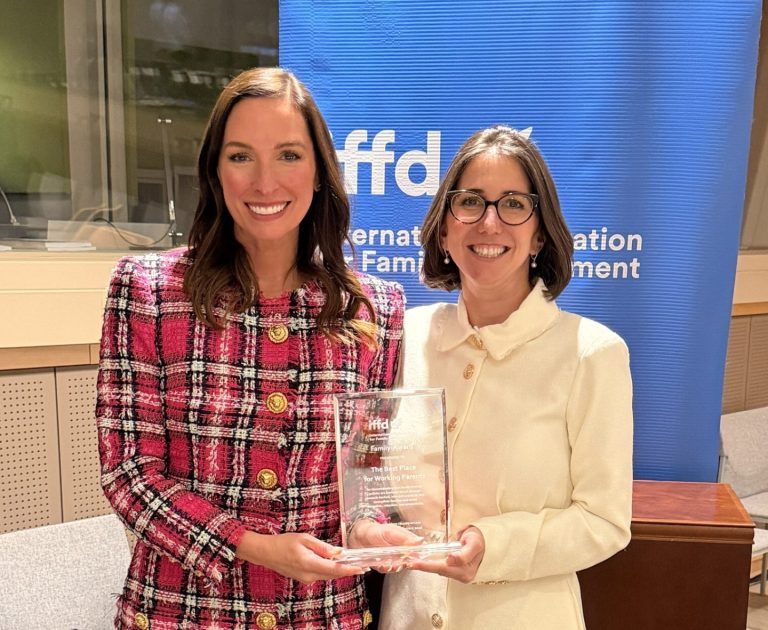
Sadie Funk, national director and co-founder of the Best Place for Working Parents, noted that the Dallas County program emulates tri-share models seen in states likeMichigan where the cost is shared by the government, the employer and the parent-employee. The Best Place for Working Parents is a national initiative based in Tarrant County that recognizes businesses that implement family-friendly policies.
In terms of child care obstacles, there’s no single entity or solution that will solve those issues alone, she said.
“I think it’s really exciting that Dallas County has put out an opportunity that really gives a gentle nudge, and actually a strategic opportunity, for business leaders to come to the table and support the child care needs of their employees in a way that doubles their ability to contribute,” she said.
Tarrant County’s investment in child care
Tarrant County invested $36 million in child care through American Rescue Plan Act funding amid COVID-19’s impact on the sector. It also approved a 50% property tax exemption last year to certain child care providers across the county. It’s unclear what the county’s appetite is to adopt a child care grant-matching program similar toDallas County’s.
The Star-Telegram reached out to all county commissioners asking if they would consider exploring a similar program locally. Commissioner Manny Ramirez, a Republican who represents Northwest Tarrant, was the only county official to respond. He said in a statement that, at an initial glance, he would be in favor of bringing a similar program to Tarrant.
“At first glance I would be 100% supportive of an initiative like this in Tarrant County,” Ramirez said.
County Judge Tim O’Hare and Commissioners Roderick Miles Jr., Alisa Simmons and Matt Krause did not respond to requests for comment as of Friday, May 23.
Business professionals support child care solutions
Fort Worth Chamber of Commerce President and CEO Steve Montgomery said DallasCounty’s program looked “intriguing.” He’s eager to see the results of it, noting that he hopes it turns out to be a success. Montgomery wondered how many children would benefit from it. Dallas County officials said it remains to be seen how many children will be reached through the fund matching.
“It looks like an innovative model. I applaud them for trying something. It’s such a big challenge for families and for employers. I have to applaud them for their innovation,” Montgomery said.
The Fort Worth Chamber of Commerce listed child care as one of its focuses in its legislative agenda for Texas’ current legislative session, specifically supporting its infrastructure to expand quality and affordable options to parents. The chamber has supported bills that, for example, would prioritize child care workers who qualify for a state subsidy to help pay for their own child’s care. Another bill the chamber supported would provide franchise tax credits to employers who contribute to their employees’ child care costs. The child care worker bill was sent to Gov. Greg Abbott’s desk on May 16; the franchise tax bill stalled in committee and did not pass theHouse.
The value of child care, though, is gaining recognition in terms of its relationship to workforce productivity, Montgomery said.
The Dallas Regional Chamber was among the supporters of Dallas County’s program and has also been advocating on a legislative level to bring forward other child care solutions that would improve economic development. Jarrad Toussant, senior vice president of the chamber’s education and workforce team, said he’s hopeful that mid-sized and smaller regions in Texas will follow the lead of larger regions likeDallas that are pursuing ways to improve child care locally.
“We are seeing a trend throughout the state of counties and local regions really leaning into this issue in a creative way, leveraging local chambers and the business community. And we’re hopeful that that will continue here in DFW,” Toussant said.