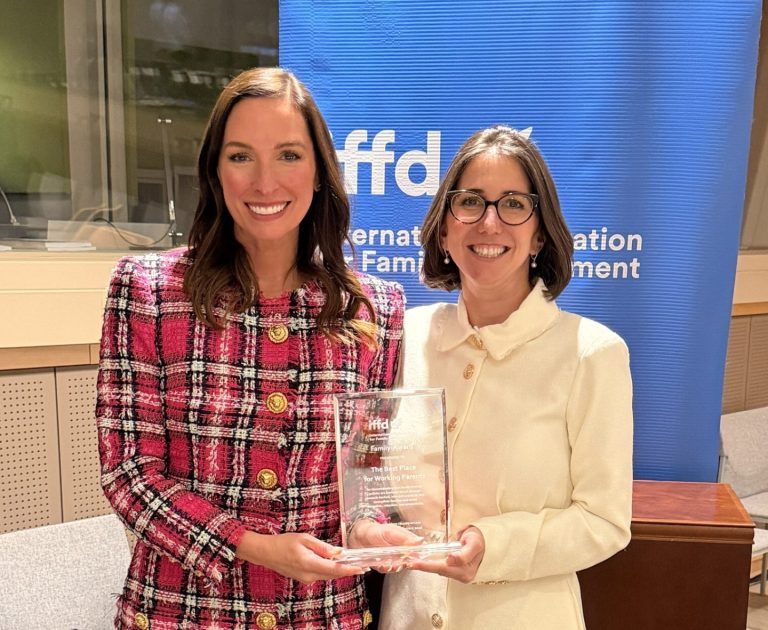
PARK CITY, Utah — In Park City, a growing number of employers are rethinking workplace policies to better support working parents — an effort local leaders say is as much about business strategy as it is about community health.
The push is gaining visibility through Best Place for Working Parents, a national program that offers employers a free, confidential online assessment to determine whether they qualify for a family-friendly workplace designation and to compare their policies with those of similar businesses. The program launched in Salt Lake, Summit, and Wasatch counties in May 2025 through a partnership among Park City Community Foundation’s Early Childhood Alliance, the Park City Chamber of Commerce & Visitors Bureau, the Salt Lake Chamber, and the Heber Valley Chamber.
Since then, 68 local organizations have taken the assessment, and nearly 50 have earned the designation. Among the local employers publicly highlighted are Alpine Distilling, Youth Sports Alliance, Stein Collection, Peace House, and Intermountain Health. The foundation pointed to a range of family-friendly policies already in place, including flexible scheduling, paid time off, remote work options, paid parental leave, breastfeeding benefits, and child care assistance.
For Becca Gerber, senior director of community and government affairs at the Park City Chamber, the program reflects the economic reality facing employers and workers in a resort town.
“We know that Park City is unaffordable for workforce families,” Gerber said. “It can be hard for working parents, especially for those with long commutes and hospitality hours that change seasonally.”
Many local businesses are small or microbusinesses operating in an economy shaped by seasonality, tight labor conditions, and rising costs, Gerber said. In that environment, family-friendly workplace policies can help employers recruit and retain staff — and not all of them require a major financial investment.
Some supports are relatively simple, she said: flexible scheduling, predictable hours, clearer accommodations for breastfeeding parents, or more openness around caregiving needs. Others, including paid leave, health coverage, and child care assistance, require a larger investment but can still make a meaningful difference for employees and employers alike.
Sara Sergent of Alpine Distilling said those policies should be understood not as extras, but as part of a strong business foundation. “Family-friendly policies are not a cost they are an investment,” Sergeant said. “When leaders trust their teams and build systems around them, performance improves. Culture is not a perk; it is infrastructure. Supporting each team member, including working parents, strengthens businesses, communities, and the next generation of leaders.”
The program’s pitch includes a business case backed by national data. According to the Best Place for Working Parents website, 75 percent of U.S. workers are caregivers. 83% of millennials say they would leave one job for another with stronger family-friendly support. And replacing an employee can cost six to nine months of that person’s salary.
The program’s 2025 National Trends Report, based on data from nearly 4,000 businesses, found that child care benefits — especially child care assistance — continue to expand across businesses of all sizes. The report also found that nearly 90 percent of businesses now offer nursing benefits, a policy the program described as approaching a standard expectation in the workplace.
Kristen Schulz, director of the Early Childhood Alliance, said the effort is rooted in a broader conversation about early childhood, affordability, and the long-term health of the community.
“If we want to be a community that is embracing families with young children, we really need to set them up for success,” Schulz said.
The assessment is designed not only to recognize businesses that already offer strong support but also to help employers see which policies are common in similar industries and where there may be room to grow, Schulz said. She added that there is little downside for employers who are unsure where they stand: if a business does not initially qualify, the results are not made public, and the employer can use the information to identify areas for improvement and retake the assessment.
In that sense, Schulz and Gerber say, the program is as much about education as it is about recognition.
A new state law could add another incentive. HB 190, the Child Care Business Tax Credit, was sponsored by Rep. Jason Thompson and Sen. Heidi Balderree and passed during the 2026 Utah legislative session. The law expands the state’s employer-provided child care tax credit to include off-site child care facilities and increases the credit for eligible small businesses to 30 percent of qualified child care expenditures, up from 10 percent. Larger employers can claim 10 percent at the state level.
Combined with existing federal credits, the new law means eligible small businesses could receive up to 80 percent back in tax credits on child care expenditures, according to The Policy Project, a Utah nonprofit that championed the legislation.
Schulz said her organization, along with Park City Municipal and Summit County staff, advocated for the bill. The Early Childhood Alliance and its partners are now working to expand the Best Place for Working Parents program statewide.
For the Chamber and the foundation, the goal is to keep more employers engaged in that conversation — particularly in a community where businesses are competing not only with one another but with the realities of housing costs, caregiving demands, and workforce shortages. Family-friendly policies, local leaders say, are increasingly part of how Park City retains the workers it needs.